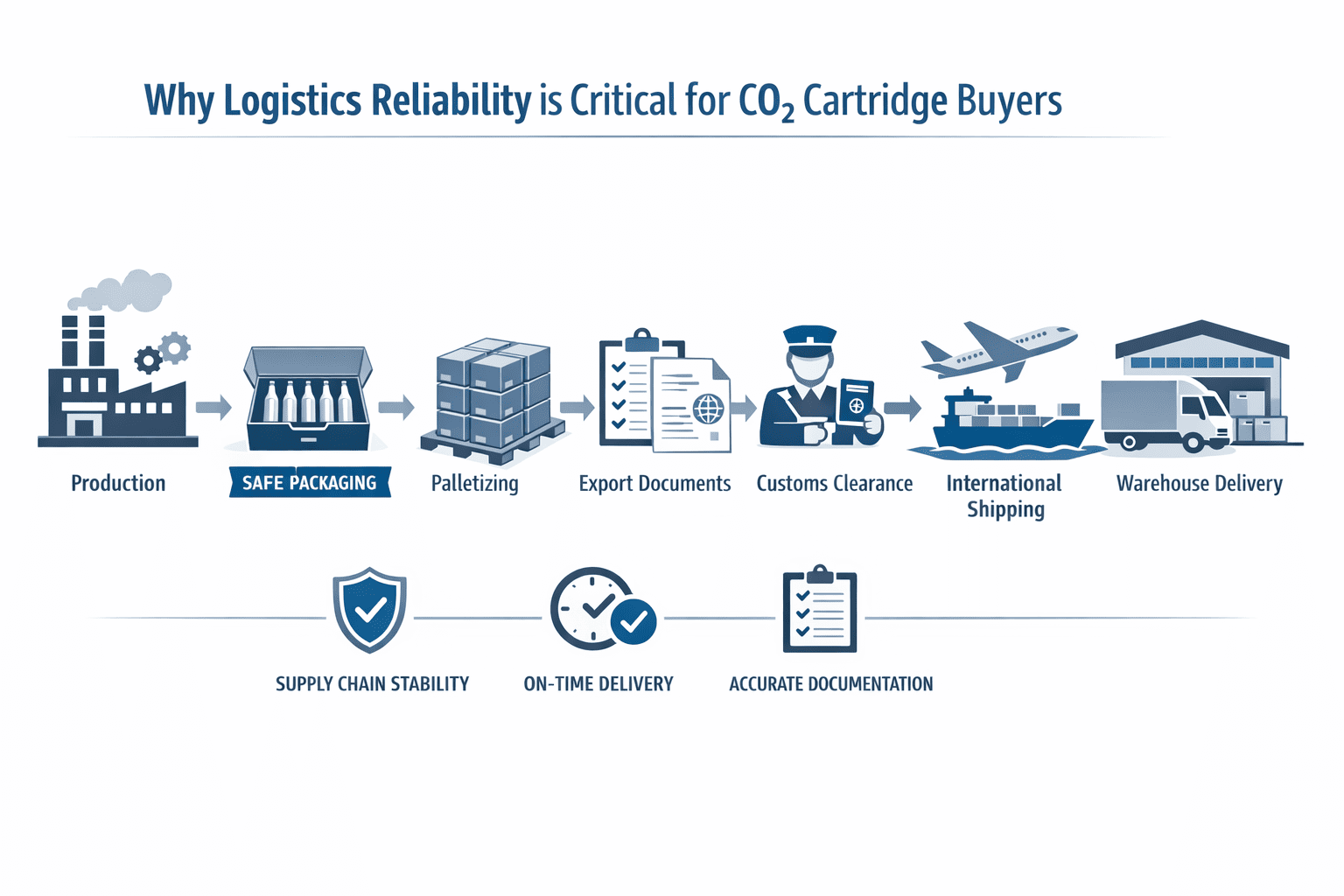
Many buyers feel stressed when a courier suddenly refuses to ship CO2 cartridges. It feels unpredictable, especially when the goods are ready, and customers are waiting. I have supported many B2B clients through this, and the truth is simple: courier rejections follow a pattern, and once you understand it, the solution becomes straightforward.
Couriers reject CO2 cartridges because CO2 is classified as compressed gas, and any unclear labeling, packaging, or declaration triggers an automatic stop. When everything is prepared correctly, CO2 cartridges ship smoothly worldwide.
Over the years, I have learned that most problems come from misunderstandings, not from the product itself. Let me walk through what matters and how we help our buyers avoid delays.
Why do couriers reject CO2 cartridges?
Couriers follow strict rules when handling gas products. If they cannot confirm the content inside the package, they immediately stop the shipment. It is not because CO2 is dangerous—it is because regulations require clear information.
CO2 shipments are rejected when couriers cannot verify the gas type, pressure, or packaging safety. Once these details are clear, rejection is rare.
When I first started working with CO2 cartridges, I wanted to understand the logic behind courier checks. It all traces back to how gas categories are defined internationally. If you want to understand this concept, the explanation of compressed gases gives a simple and clear foundation.
The most common rejection triggers
| Issue | Reason |
|---|---|
| Missing Class 2.2 label | Courier cannot confirm gas type |
| Wrong item description | System flags the shipment |
| No MSDS | Some hubs require it |
| Cartridges moving inside the box | Considered unsafe |
| Overweight carton | Pressurized items have limits |
Once buyers understand this list, they usually realize the courier is not “rejecting CO2” — they are rejecting incomplete information.
What are the international shipping regulations for CO2?
CO2 cartridges are classified under UN1013 (Class 2.2). This classification guides how they must be packaged, labeled, and declared. No matter which courier you use, the foundation is the same.
Correct classification, safe packaging, and simple documentation are the key factors. When these are in place, the shipment passes most checks.
What matters most
1. UN1013 classification
The universal identifier for CO2 cartridges.
2. MSDS
Some routes require it before shipment.
3. Packaging strength
Boxes must be stable and not deform.
4. Pressure and weight
Couriers check this during the approval process.
Many new buyers ask how they can quickly understand the specifications that couriers look for. To save time, I usually share our internal guide on CO2 cartridge specifications and shipping requirements, which helps them prepare documents with confidence.
How to package CO2 cartridges safely?
Packaging is the number one reason for courier rejection. Even when documents are correct, a loosely packed box can fail the inspection.
The goal is simple: nothing inside the carton should move, and the box should stay firm under pressure.
How we recommend packaging
1. Inner tray
Holds each cartridge firmly.
2. Layer divider
Prevents metal contact.
3. Bubble wrap
Absorbs shock during sorting.
4. Class 2.2 label
Gives couriers immediate clarity.
5. Thick outer carton
Protects the shipment during stacking.
| Packaging Component | Purpose |
|---|---|
| Inner tray | Keeps cartridges fixed |
| Divider | Avoids collision |
| Bubble wrap | Reduces vibration |
| Label | Identifies gas category |
| Outer box | Avoids crushing |
Before shipment, many buyers send me photos of their packaging. This simple step helps avoid most risks.
Which shipping channels handle CO2 reliably?
Not all couriers treat CO2 the same. Some accept it widely; others allow it only through certain hubs. Choosing the correct channel makes a huge difference.
DG-approved air freight, sea freight, and selected express routes are the most reliable. Postal or economy channels often reject CO2 automatically.
What I advise my customers
1. Air freight (DG approved)
Fast, stable, ideal for medium volumes.
2. Sea freight
Best for large orders and predictable planning.
3. Selected express routes
Some DHL and UPS networks accept CO2; it depends on the region.
4. Postal channels
High rejection rate; not recommended.
| Channel | Reliability | Notes |
|---|---|---|
| Sea freight | High | Bulk quantities |
| Air freight | High | Time-sensitive shipments |
| DG express | Medium | Hub-dependent |
| Regular express | Low | Often restricted |
| Postal | Very low | Almost always rejected |
My general rule for customers is simple: choose stability first, speed second.
How does Alizeemetal ensure smooth customs clearance?
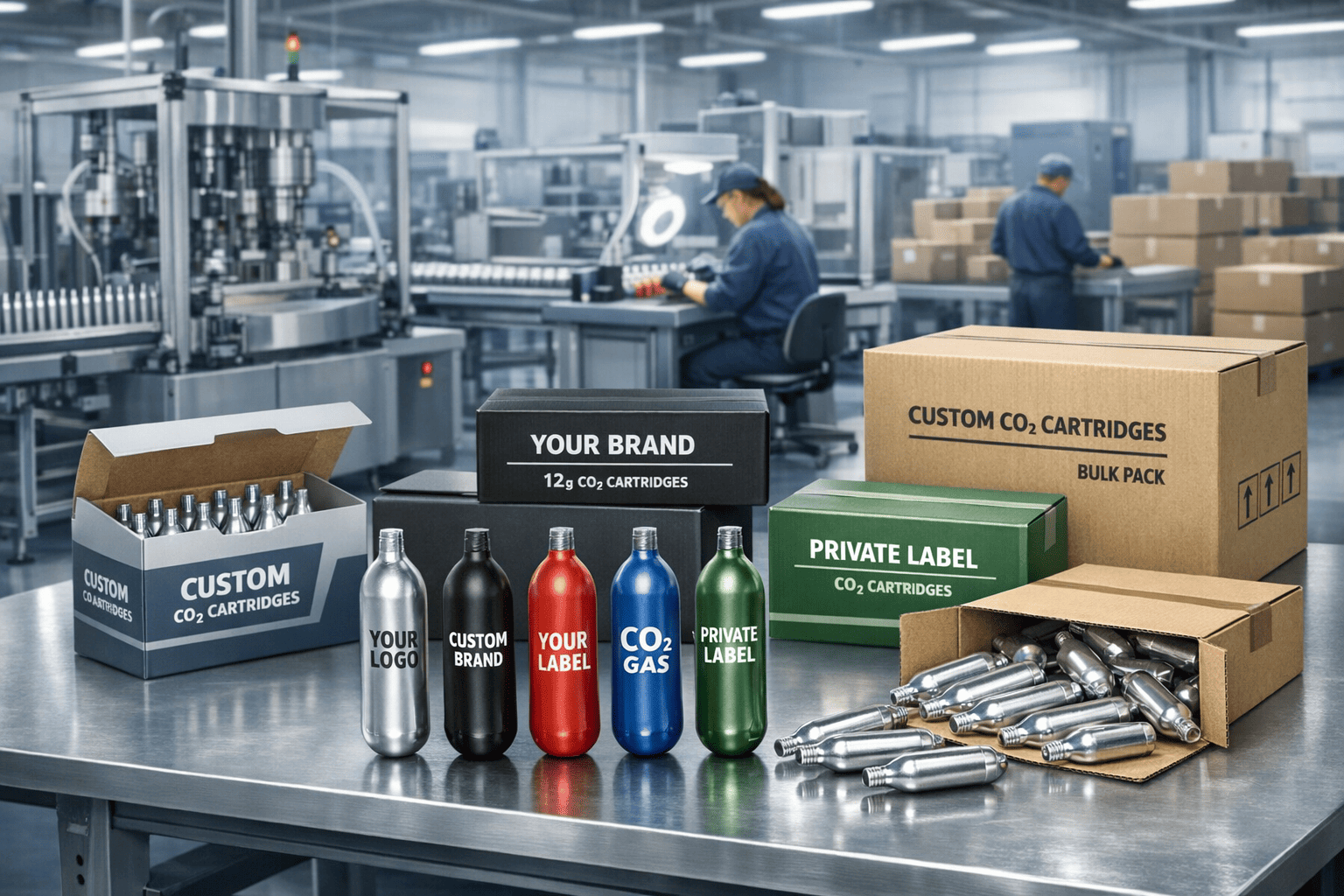
As a factory with five production lines and full in-house production, we prepare each shipment carefully to avoid delays for our buyers. We follow the same process for every order, no matter the destination.
We use DG-standard packaging, correct labeling, complete documentation, and stable logistics routes. This preparation is why our shipments pass courier checks smoothly.
Our pre-shipment process
1. Classification
Correct gas labels and descriptions.
2. Packaging
Trays, dividers, bubble wrap, and strong cartons.
3. Documents
Invoice, packing list, MSDS, and other required papers.
4. Inspection
We check carton strength, stability, and labels.
5. Logistics partners
We use proven routes to Europe, the U.S., Australia, Southeast Asia, Türkiye, the Middle East, Brazil, and Africa.
| Step | We verify |
|---|---|
| Product | Weight and appearance |
| Packaging | No internal movement |
| Labeling | Correct gas category |
| Documents | Complete and clear |
| Route | Approved and stable |
This structure allows our buyers to ship confidently without worrying about rejection.
Conclusion
With clear labeling, strong packaging, and complete documents, CO2 cartridges pass courier checks smoothly. Preparation is always the key to safe and successful shipping.