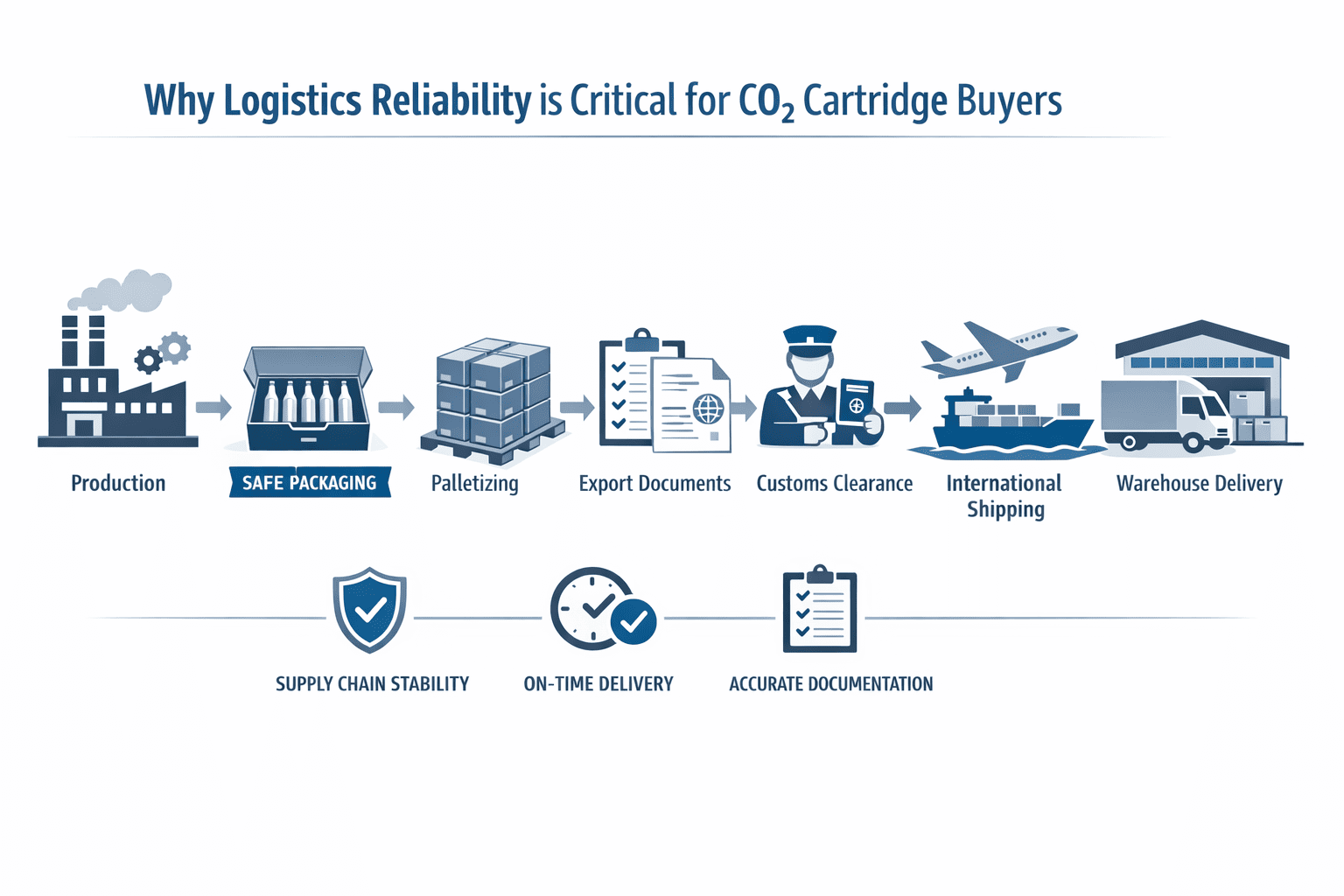
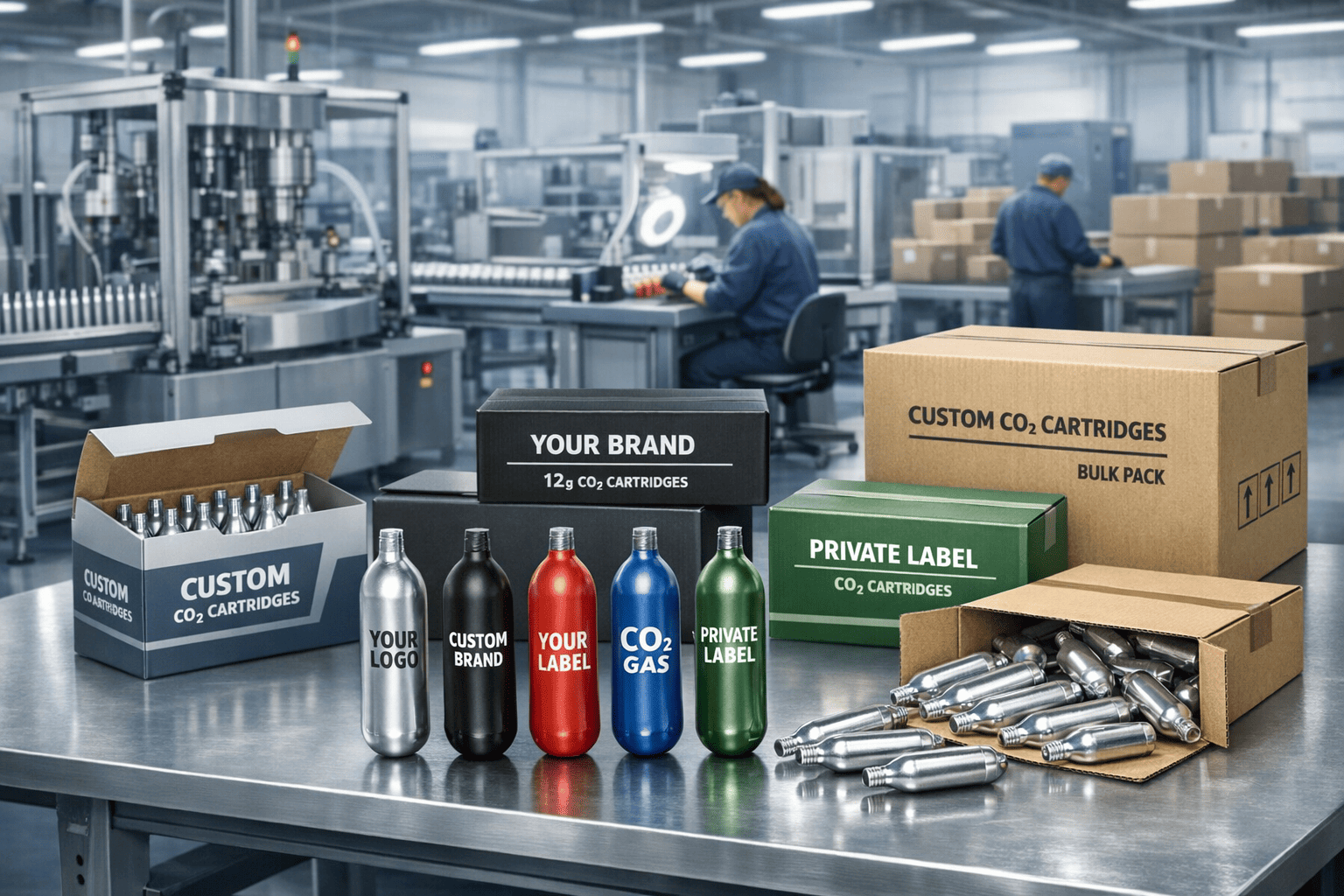
Many buyers panic when they learn that CO2 cartridges are pressurized goods. They worry their courier will reject the shipment or that their order will be delayed for weeks. I understand this fear because almost every new importer asks me whether air shipping is even possible.
In reality, CO2 cartridges are allowed under IATA dangerous-goods classifications, but most international logistics channels—especially those departing from China—do not accept them by air. For commercial shipments, air freight is highly restricted and rarely approved.
This gap between “theoretical rules” and “actual logistics operations” can easily confuse new buyers. So before planning any urgent shipment, it is important to understand what airlines technically allow and what freight forwarders truly accept in day-to-day practice.
Why is air freight allowed in theory but rarely approved in real shipping?
Many people assume CO2 cartridges should be easy to move by air because the product is small. That is not how airlines evaluate risk.
CO2 cartridges fall under UN1013 or UN2037, which are permitted in controlled quantities, but operational airline policies are much stricter than IATA’s minimum rules.
Airlines classify pressurized cylinders as high-risk cargo. Even small cartridges ≤33g face heavy restrictions. Scientific references like the explanation of compressed gases show why internal pressure matters in aviation conditions.
Airlines follow stricter rules than the IATA table
Most carriers reject cylinders during acceptance checks because:
- internal pressure increases with altitude
- screening procedures detect them as hazardous
- only specialized DG carriers accept such goods
- commercial routes avoid high-risk items to reduce liability
What happens in actual cargo screening
| What IATA Allows | What Airlines Actually Do |
|---|---|
| Small CO2 cartridges permitted with proper DG labels | Reject most pressurized cylinders |
| Special packaging and paperwork allowed | Still denied due to airline internal risk control |
| Limited quantities possible | Not suitable for commercial shipment volumes |
| Acceptable on paper | Rarely approved in practice |
This is why almost every importer who contacts me ends up discovering that air freight is not a workable option for CO2 products.
What limitations should importers expect when shipping CO2 cartridges?
Understanding real-world limitations prevents delays and unexpected logistics costs.
Most Chinese outbound air channels—commercial express, cargo airlines, freight forwarders—do not accept CO2 cartridges at all. Even the smallest ones fall under “restricted gas cylinders” and are blocked in routine screening.
Key limitations that buyers often overlook
1. Operational airline bans
Even if the product meets all DG rules, the airline has the final say—and they reject most shipments.
2. Unsuitable for commercial quantity
Airlines might consider a few personal-use cylinders but will not accept bulk cargo.
3. High rejection risk
Misdeclaration leads to immediate refusal or extra fees for return or disposal.
4. Extra approval time
DG shipments require internal airline review, which can add several days, and most still fail approval.
Summary of real limitations
| Limitation | Impact |
|---|---|
| Airline refusals | Air freight unavailable for commercial orders |
| Quantity caps | Small DG allowances do not fit wholesale needs |
| Strict screening | High failure rate |
| Extra DG handling fees | Makes air shipping uneconomical |
For B2B buyers, this means air freight should not be included in supply forecasting for CO2 cartridges.
How do businesses safely ship CO2 cartridges if air freight is restricted?
This is the question I receive the most. The good news is that there are reliable alternatives.
Commercial shipments of CO2 cartridges are normally transported by sea freight, railway freight, or cross-border trucking, depending on the destination.
These methods accept pressurized cylinders without the extreme restrictions that airlines impose.
Practical options used by most importers
1. Sea Freight (the most reliable method)
Best for large-volume orders. Stable, accepted by all carriers, predictable customs process.
2. Railway Freight (Europe)
A faster option than sea, suitable for stable restocking schedules.
3. Cross-Border Trucking (Asia & Middle East)
Flexible, fast, and commonly used for medium-sized orders.
4. Working with a factory experienced in DG exports
Professional packaging, correct paperwork, and pre-inspection reduce the risk of delays.
A note about new importers
Some importers, especially those sourcing directly from China for the first time, often look for a simple explanation of how CO2 shipments are arranged. Many of them end up reading a short overview they found on this website about buying CO2 cartridges from China before placing their initial order.
Comparison of real shipping methods
| Method | Suitable For | Notes |
|---|---|---|
| Sea Freight | Bulk orders | Most stable and cost-effective |
| Railway | EU importers | Faster than sea |
| Cross-Border Trucking | Asia / Middle East | Flexible alternative |
| Air Freight | Almost none | Highly restricted and rarely approved |
This is why I always recommend planning your shipment strategy early—air freight should not be relied upon for urgent restocking.
Conclusion
CO2 cartridges are technically allowed under IATA rules, but most global logistics channels—especially those departing from China—do not accept them by air. For commercial buyers, sea freight, railway, and trucking remain the only stable and scalable options.