Nitrogen offers a smoother, creamier texture than CO2 in beer and coffee, making it ideal for cold brew and stouts, while CO2 delivers the crisp fizz preferred in lagers and sparkling beverages.
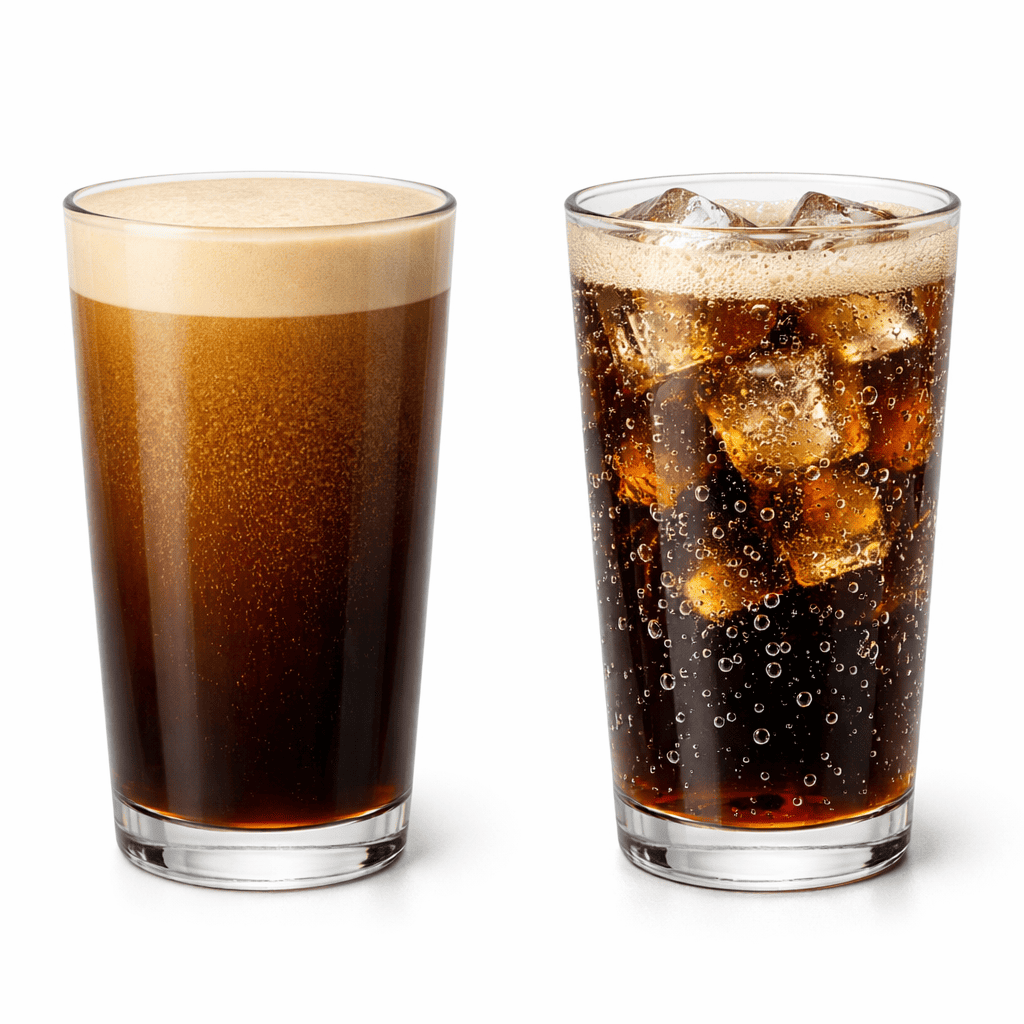
- Nitrogen provides a creamy, less acidic mouthfeel.
- CO2 adds sharpness, fizz, and bite.
- N2 is best for cold brew coffee and stouts.
- CO2 suits lagers, sparkling drinks, and sodas.
- Choosing the right gas affects both flavor and customer experience.
Some drinks feel smoother and taste richer, but why? The secret often lies in the gas you use.
When we talk about mouthfeel, foam stability, or visual appeal in a pint of stout or a cup of cold brew, the type of gas used makes a noticeable difference. Let’s dive into how nitrogen and CO2 compare in coffee and beer — and which one is right for your business.
Why does gas choice matter for flavor?
A great drink isn’t just about taste — texture, visual presentation, and even sound (that hiss when you open a bottle) shape the experience.
Nitrogen and CO2 influence carbonation, aroma release, and how the liquid feels in your mouth. CO2 is sharp and fizzy. Nitrogen is silky and creamy. That contrast changes how customers enjoy the drink.
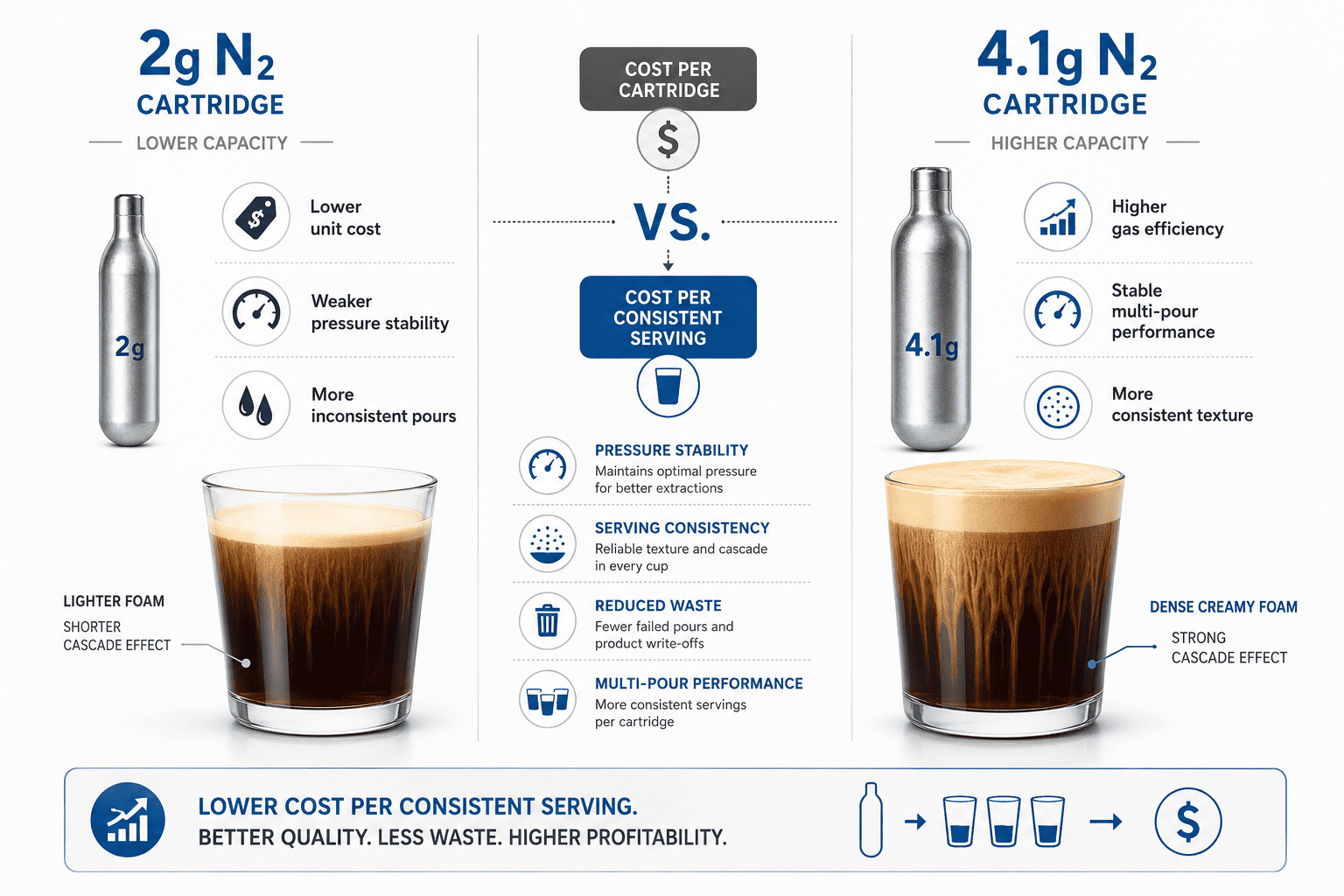
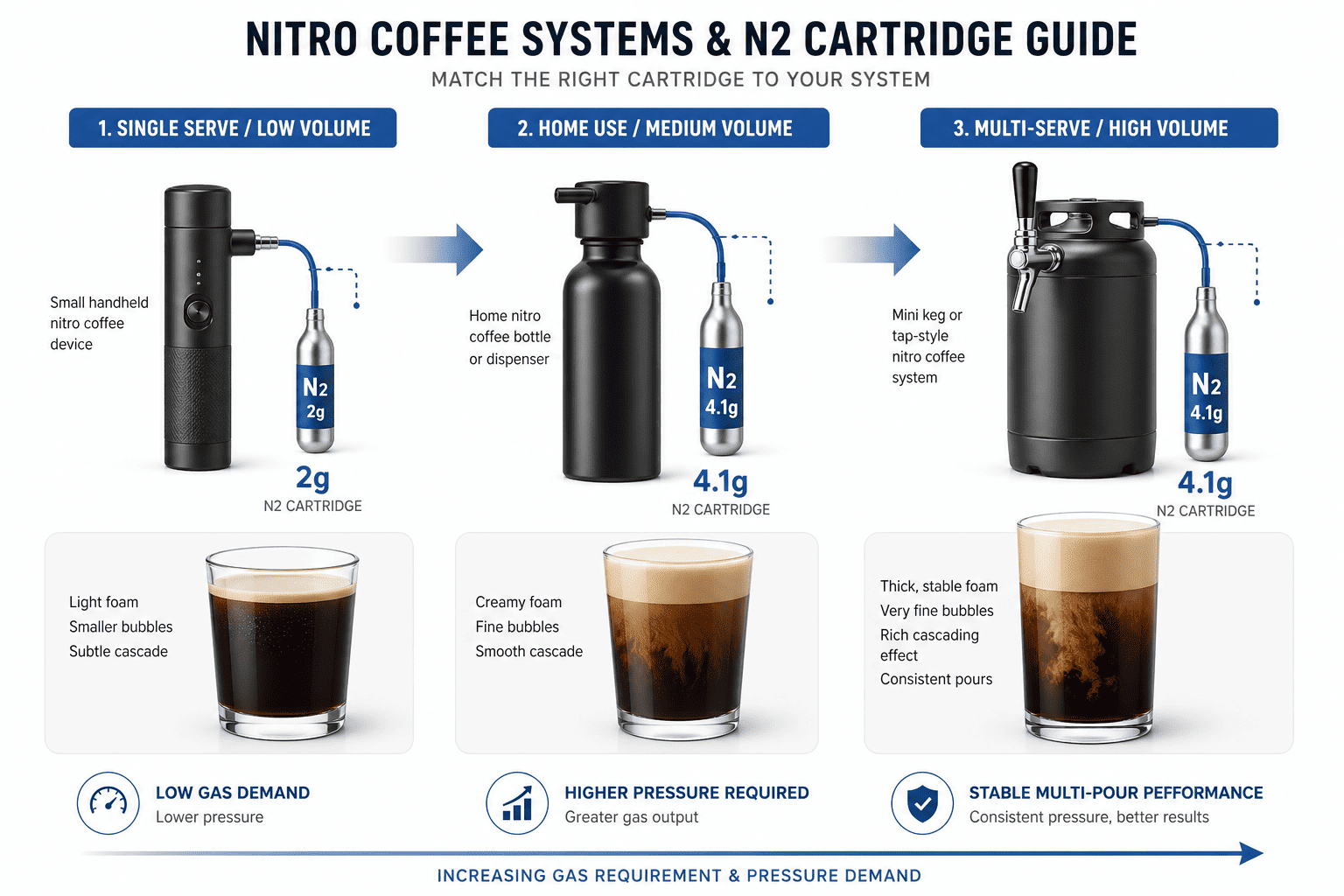
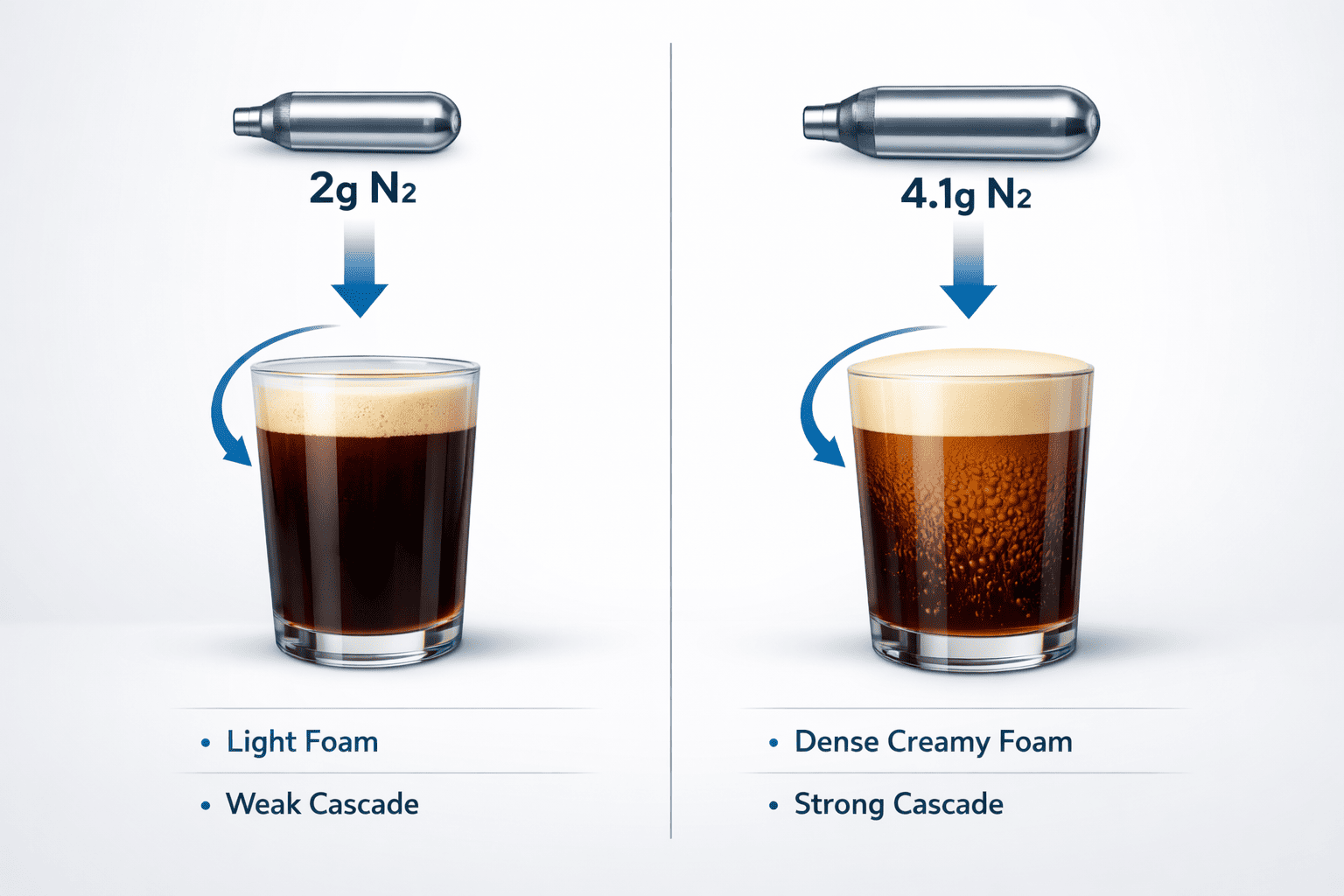
In the coffee world, this contrast is especially clear. Nitrogen-infused coffee creates a cascading foam and a creamy mouthfeel that’s popular in cold brew taps worldwide. If you’re looking for food-grade nitrogen cartridges specifically for coffee, I recommend checking out our N2 cartridges for coffee designed for consistent flavor performance in commercial settings.
How does nitrogen affect beer?
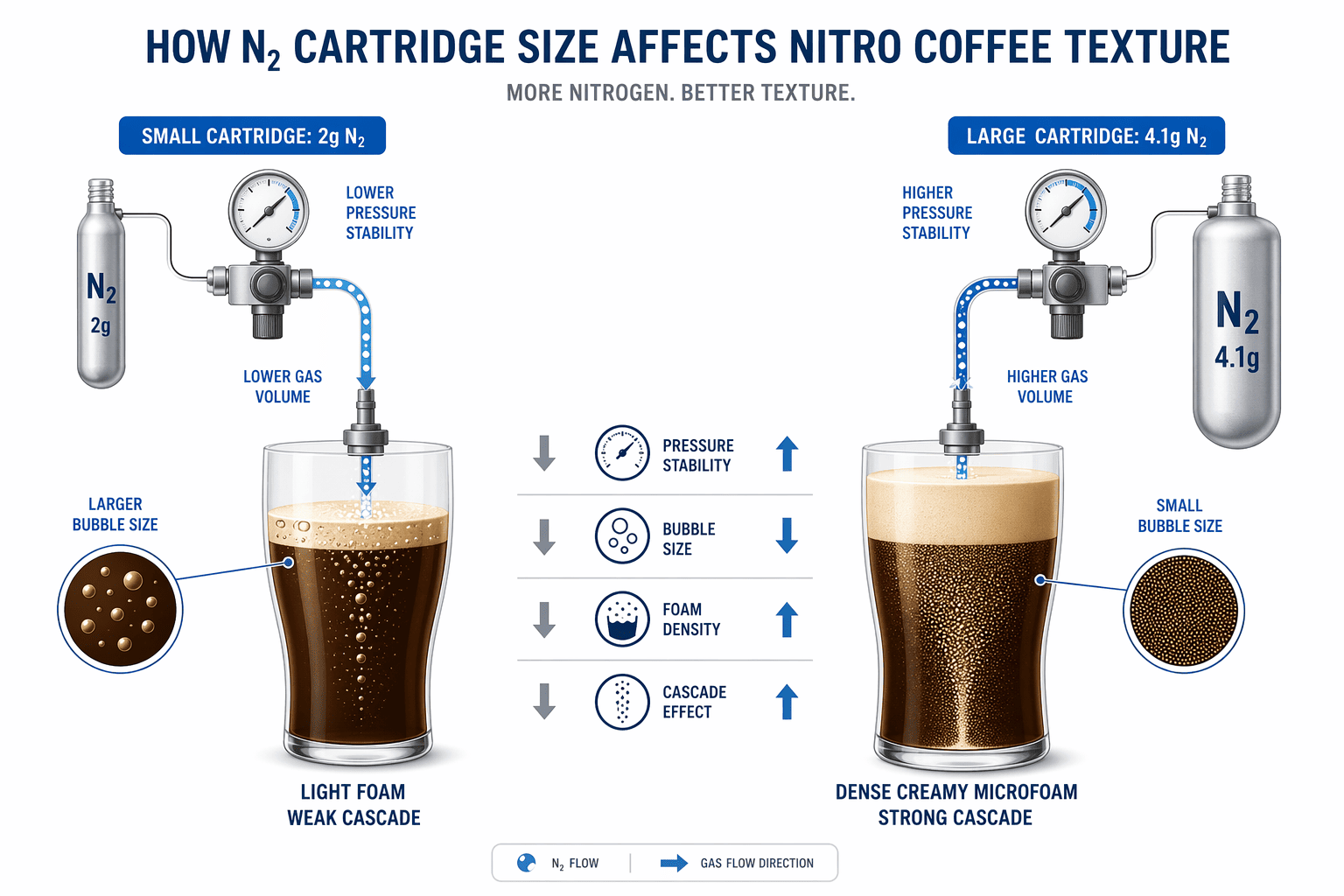
Nitrogen has long been a favorite in stouts and porters. Unlike CO2, which produces large, sharp bubbles, nitrogen creates tiny bubbles that feel softer on the tongue.
The result? A smoother sip, a thicker foam head, and less acidity. This is why Guinness and other classic stouts use nitrogen gas blends — usually 70% nitrogen and 30% CO2 — in their draft systems.
To maintain stable head retention and creamy texture, beer kegs need precise gas control. For a deeper look at how gas type affects beer foam and texture, see this complete guide to nitro beer brewing and experience.
Why is nitrogen used in coffee?
Nitrogen gives cold brew coffee an elevated texture that feels rich and indulgent. When dispensed through a tap, it creates a cascading effect and a thick foam, like a stout beer.
Compared to CO2, nitrogen does not make coffee sour or acidic, and it keeps the drink stable longer. That’s why nitrogen cold brew is now a staple in coffee shops worldwide.
Nitrogen is also less soluble in liquid than CO2. This means the coffee doesn’t become overly carbonated, maintaining a mellow and clean profile.
Key differences in performance:
| Feature | CO2 | Nitrogen (N2) |
|---|---|---|
| Bubble size | Large, sharp | Tiny, smooth |
| Mouthfeel | Fizzy, bright | Creamy, rich |
| Solubility | High (more carbonated) | Low (less carbonation) |
| Ideal for | Lagers, sodas | Stouts, porters, cold brew coffee |
| Flavor impact | Can increase acidity | Mellow, enhances body |
What should you choose for your business?
The answer depends on your product and the customer experience you want to create.
If you’re serving crisp lagers or sparkling sodas, CO2 is ideal for that refreshing bite. But if your brand is about smooth, premium experiences — like craft coffee or dark beer — nitrogen offers a point of differentiation.
At Alizeemetal, we support both CO2 and nitrogen cartridge production in a variety of sizes. We also offer customization for gas mix ratios (e.g. 70/30 N2/CO2) for beer systems.
Conclusion
Nitrogen adds a creamy, smooth edge to drinks, while CO2 brings sparkle. Choosing the right one changes everything.