Cafés should use food-grade CO2 for any beer or soda equipment that directly touches drinks, because food-grade CO2 meets beverage safety standards, limits impurities, and ensures stable carbonation under pressure. Industrial CO2 is not designed for ingestion and can introduce quality, compliance, and operational risks in beverage systems.
TL;DR – Quick Summary
- Food-grade CO2 is required when gas directly contacts beer or soda.
- Industrial CO2 may contain trace impurities unsuitable for beverages.
- Beer and soda systems rely on stable pressure and controlled carbonation.
- Inconsistent gas supply leads to foam issues, taste drift, and maintenance problems.
- Using food-grade CO2 simplifies inspections and long-term operations.
Introduction
Most cafés obsess over beans, recipes, and machines. Very few stop to think about the gas flowing through their beverage systems.
That blind spot can be expensive.
Beer and soda systems are not sealed industrial setups. They are customer-facing, regulated, and sensitive to small changes in pressure and purity. When the wrong CO2 is used, problems rarely appear on day one. They surface weeks or months later as unstable pours, inconsistent taste, or uncomfortable inspection conversations.
This article explains why food-grade CO2 matters specifically for beer and soda equipment, and what cafés often misunderstand when they treat gas as a utility instead of an ingredient.
CO2 Contact Summary
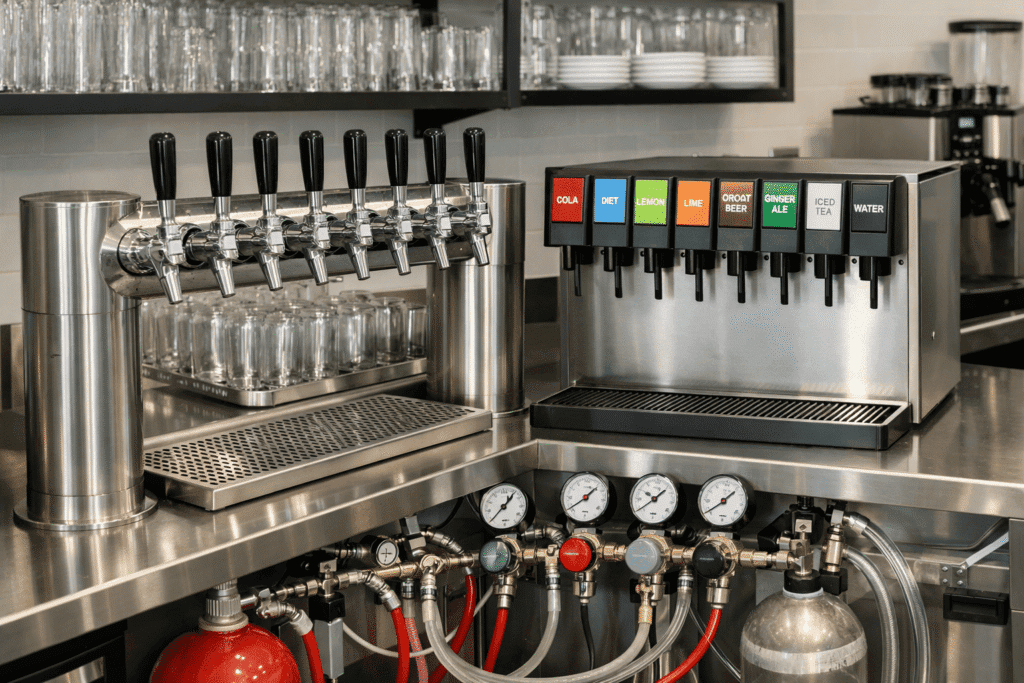
Beer and soda systems involve direct gas-to-liquid interaction. CO2 dissolves into the beverage, controls carbonation, and drives dispensing pressure. Because the gas becomes part of the final drink, its purity and stability directly affect quality and safety.
👉 What equipment counts as “direct contact”?
Food-Grade vs Industrial CO2 Summary
Food-grade CO2 is produced, purified, and handled under standards intended for human consumption. Industrial CO2 is not. While the chemical formula is identical, acceptable impurity limits, cleaning procedures, and quality controls differ significantly.
👉 Is industrial CO2 chemically the same but practically different?
System Stability Summary
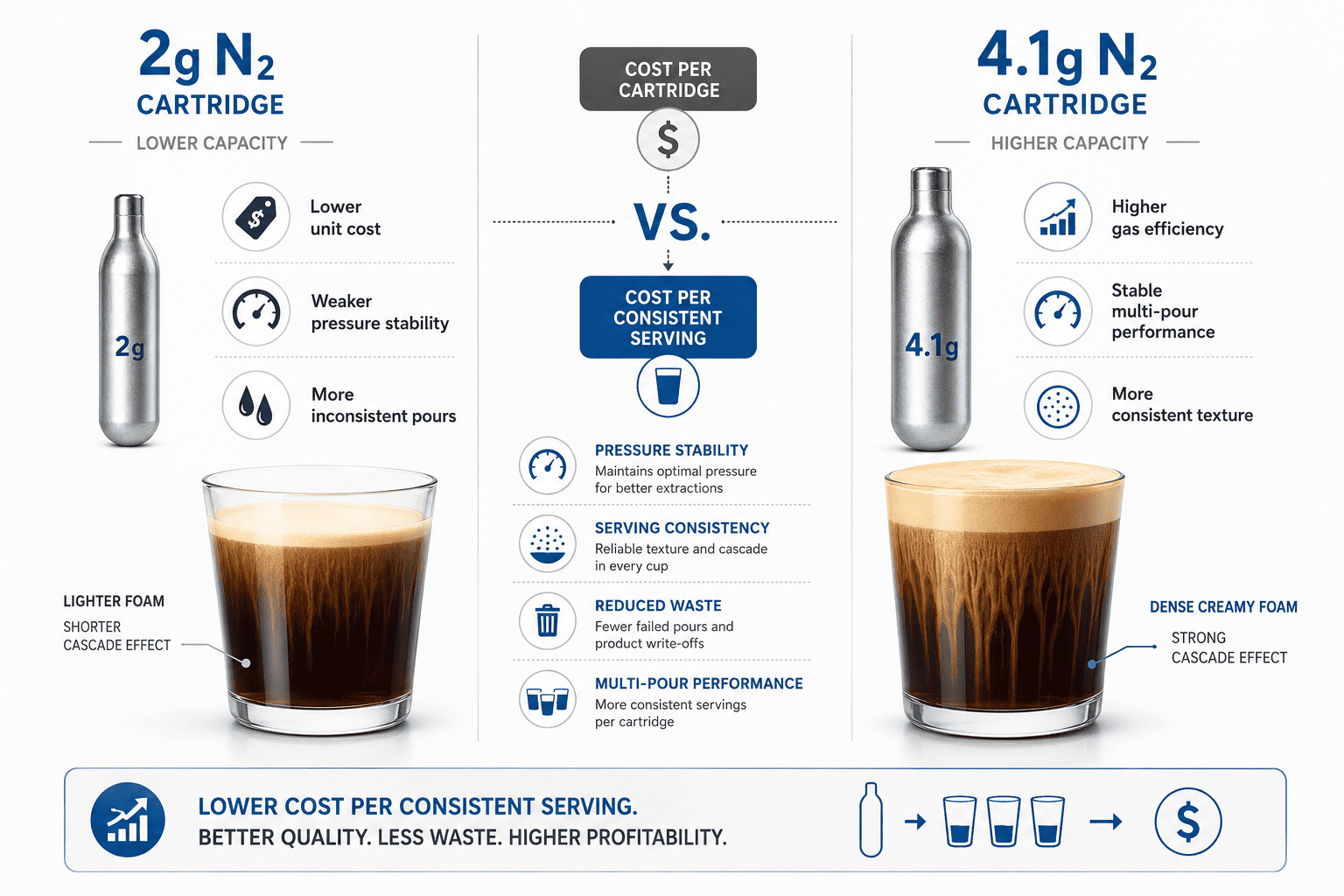
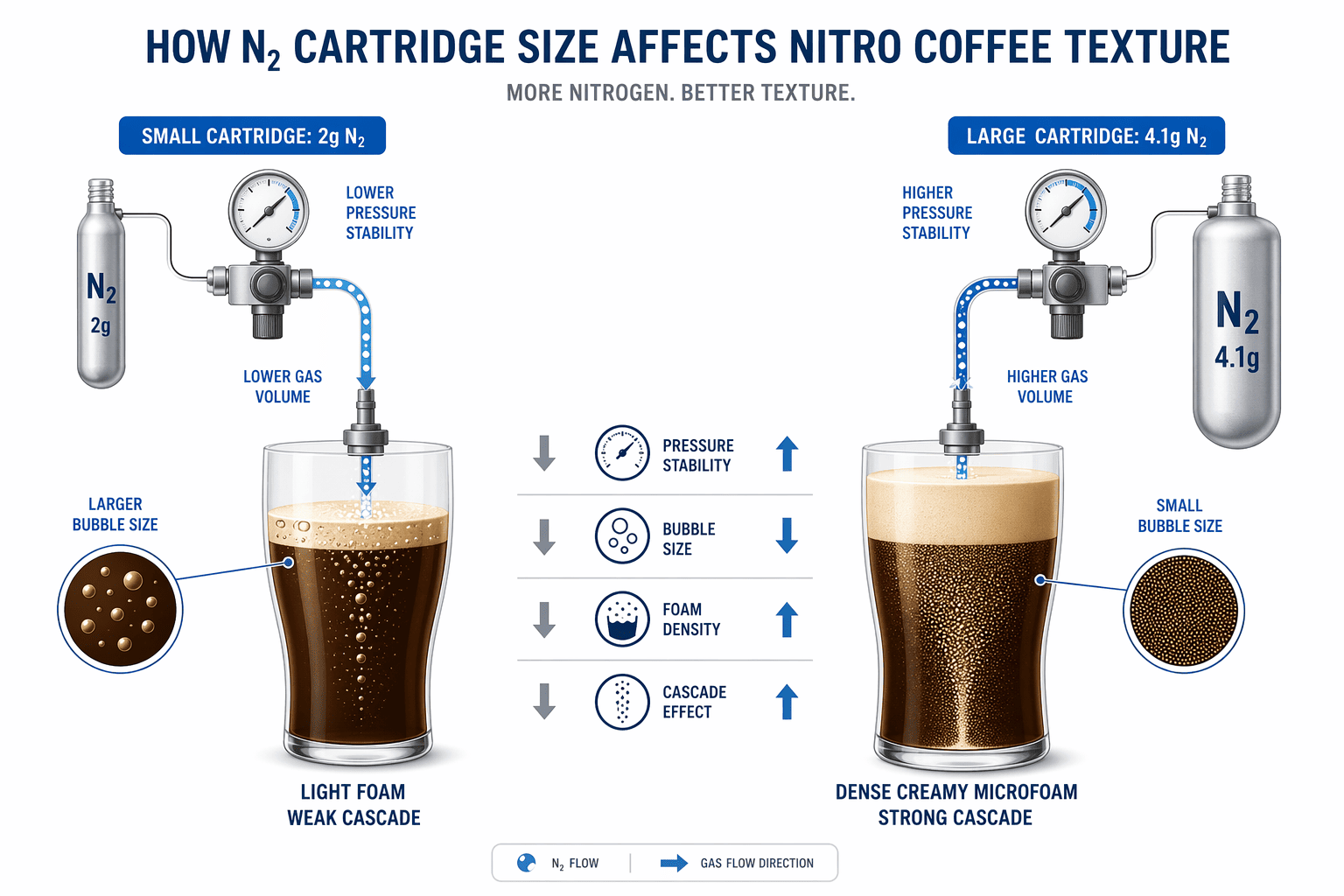
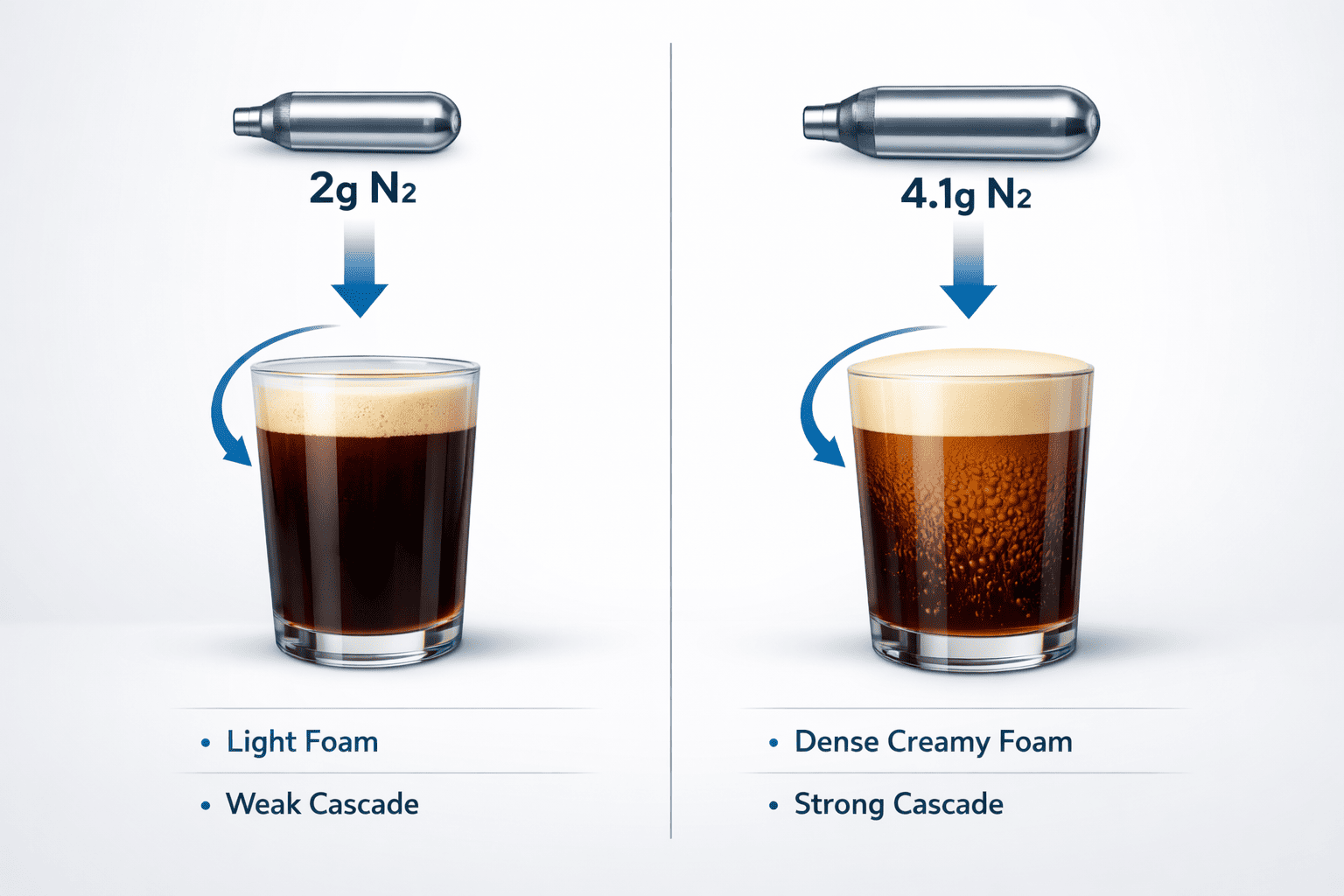
Carbonation stability depends on pressure consistency, temperature, and gas volume. Small or unstable gas sources create wider pressure swings, leading to foam problems and inconsistent serving results.
👉 Why does gas stability matter more than cartridge size?
Compliance & Inspection Summary
Once a café serves beer or soda, it becomes part of the food supply chain. Inspectors focus on hygiene, documentation, and system integrity. Using food-grade CO2 removes ambiguity and simplifies compliance discussions.
👉 What do inspectors actually look for?
Deep Content Sections
Technical Comparison Table
| Factor | Food-Grade CO2 | Industrial CO2 |
|---|---|---|
| Intended use | Beverages & food | Industrial processes |
| Impurity control | Strict limits | Application-dependent |
| Carbonation stability | High | Variable |
| Inspection risk | Low | Higher |
| Long-term equipment impact | Predictable | Inconsistent |
Pressure and Carbonation Explained (Conceptual)
Think of carbonation as a balance:
CO2 Pressure + Temperature + Time = Stable Carbonation
When gas volume is small or pressure drops quickly, the system struggles to maintain equilibrium. The result is excessive foam, flat drinks, or constant manual adjustment during service.
This behavior is not subjective. It follows physical gas–liquid interaction principles. A clear technical explanation of how dissolved CO2 behaves under pressure in beverages is outlined in Anton Paar’s overview of carbon dioxide in beverages, which helps explain why smaller or unstable gas sources lead to greater variability during serving.
Disposable Systems and Real-World Café Use
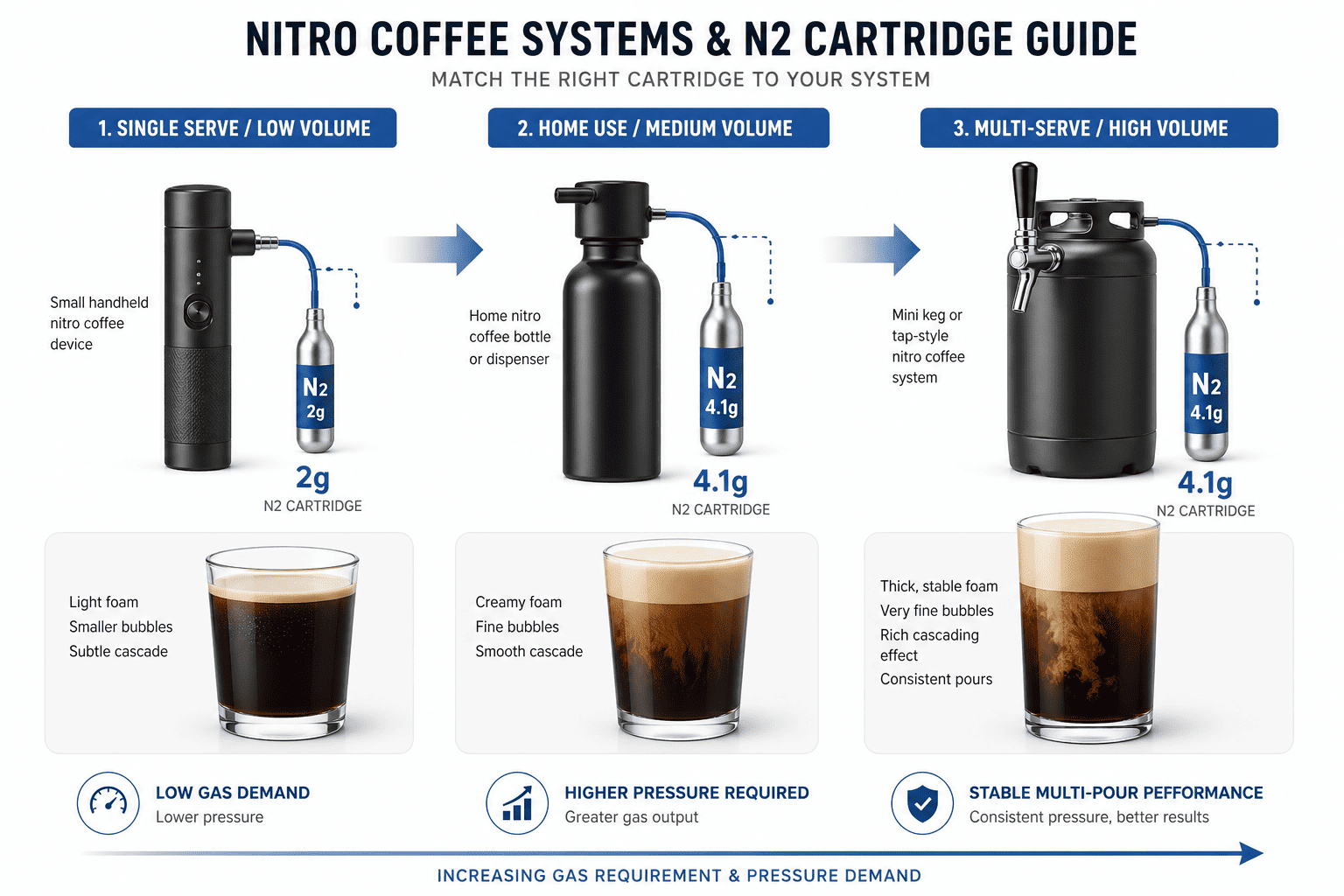
In small and mid-sized draft setups, many cafés rely on disposable gas solutions. In these cases, selecting CO2 cartridges designed for beer dispensing is not just about convenience. It directly affects pressure retention, service consistency, and staff workload during peak hours.
Common Causes of Beverage System Problems
- Gas purity below beverage standards
- Rapid pressure loss from undersized cartridges
- Inconsistent regulator performance
- Residue buildup inside valves and lines
Most of these issues trace back to gas choice rather than hardware failure.
Conclusion
For cafés serving beer and soda, CO2 is not just a utility. It is part of the drink.
Using food-grade CO2 protects beverage quality, stabilizes daily operations, and reduces long-term compliance risk. Treat gas as an ingredient, and the entire system becomes easier to manage.