Skip to content
Direct Answer
CO2 cartridges should be purchased based on real usage data, not habit, because oversizing often increases unit cost, shipping weight, and storage pressure without improving performance, while undersizing can raise replacement frequency and customer complaints.
TL;DR – Quick Summary
- Many buyers repeat the same CO2 cartridge size out of habit.
- Oversized cartridges raise hidden costs in freight and storage.
- Undersized cartridges increase replacement frequency and downtime.
- Real usage varies by application, temperature, and device efficiency.
- A size-matching strategy improves margins and SKU turnover.
- Thread type and packaging rules matter as much as grams.
Introduction
I often see distributors reorder the same cartridge size for years. That choice feels safe. Nobody wants to explain change to customers or rework packaging. But if size does not match real consumption, the waste is quiet and constant.
When the order volume is big, even a small mismatch becomes expensive. A few grams per unit can turn into a big annual number after shipping, warehousing, and slow-moving stock are added. That is why I prefer one simple mindset: I do not buy “a popular size.” I buy the size that matches real usage.
Application Consumption Summary
Usage is not random. Each application has a typical consumption range, so size choice should start from the end-use scenario, not the last purchase order.
👉 Should cartridge size be reviewed with usage data instead of habit?
Cost Structure Summary
The cost difference is not just the gas. It is also steel, packaging, pallet utilization, and freight efficiency.
👉 Does a heavier cartridge really improve value per use?
Inventory Efficiency Summary
A wrong size can turn into slow-moving stock, higher carton volume, and more frequent replenishment cycles.
👉 Can size optimization improve turnover and reduce warehouse pressure?
Technical Consumption Comparison
| Application Type | Common Size | Typical Real Use | If Oversized | If Undersized |
|---|---|---|---|---|
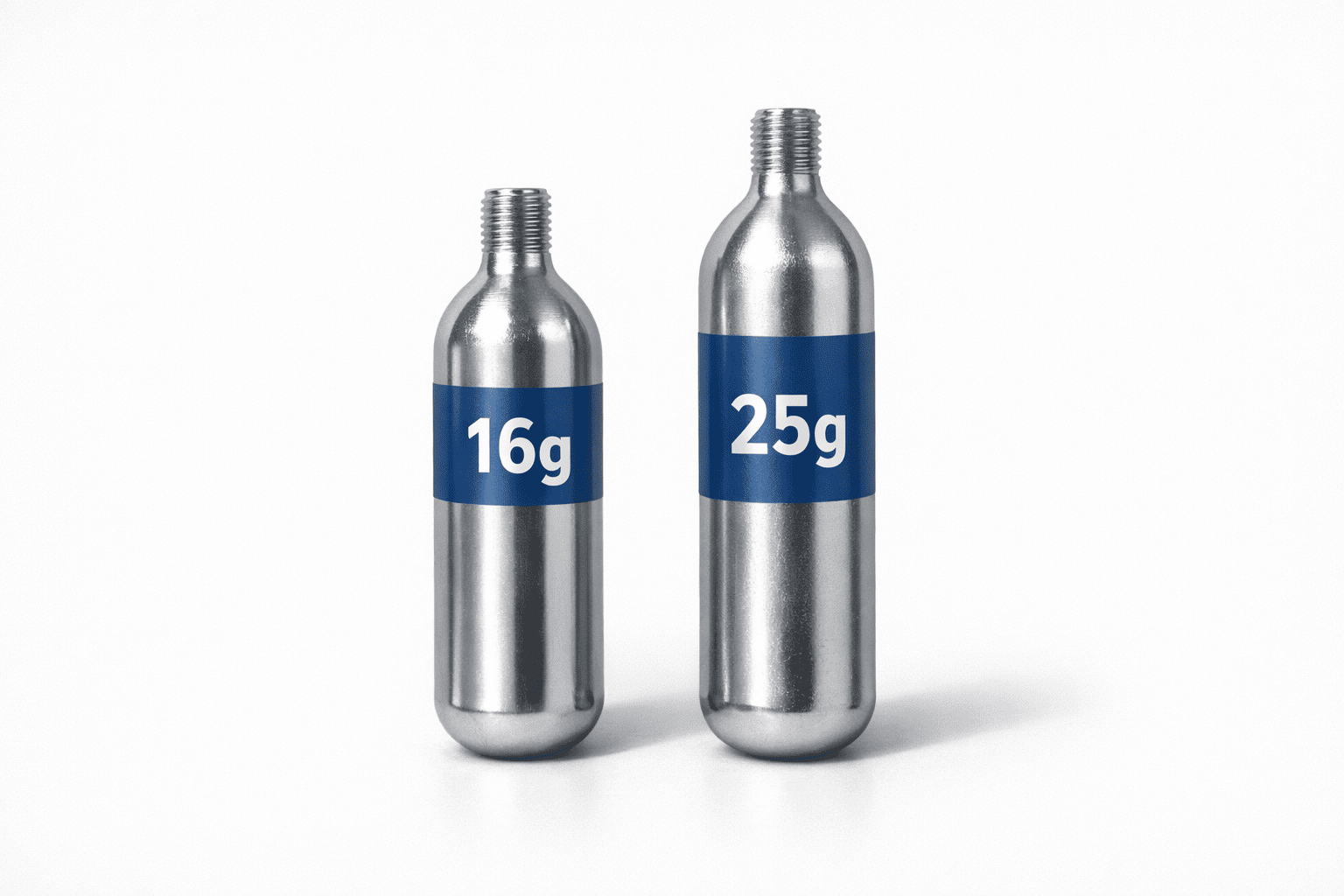
| Bicycle Tire Inflation | 16g / 20g | 14–18g | Pay for unused capacity | Cannot fully inflate some tires |
| Soda Carbonation | 8g / 12g | 8–10g per liter | Higher cost per bottle | Weak carbonation |
| Beer Dispensing / Growler | 16g | Application-driven | Higher unit cost | Unstable pressure experience |
| Airgun / Airsoft | 12g | 40–100 shots | Small waste per unit | Drop in consistency |
| Life Jacket | 24g–33g | Full discharge required | Safety buffer is acceptable | Inflation failure risk |
This table is the reason I do not treat “grams” as a branding decision. In some categories, oversizing is a safety buffer. In others, oversizing is just cost leakage.
Pressure Behavior and Temperature Impact
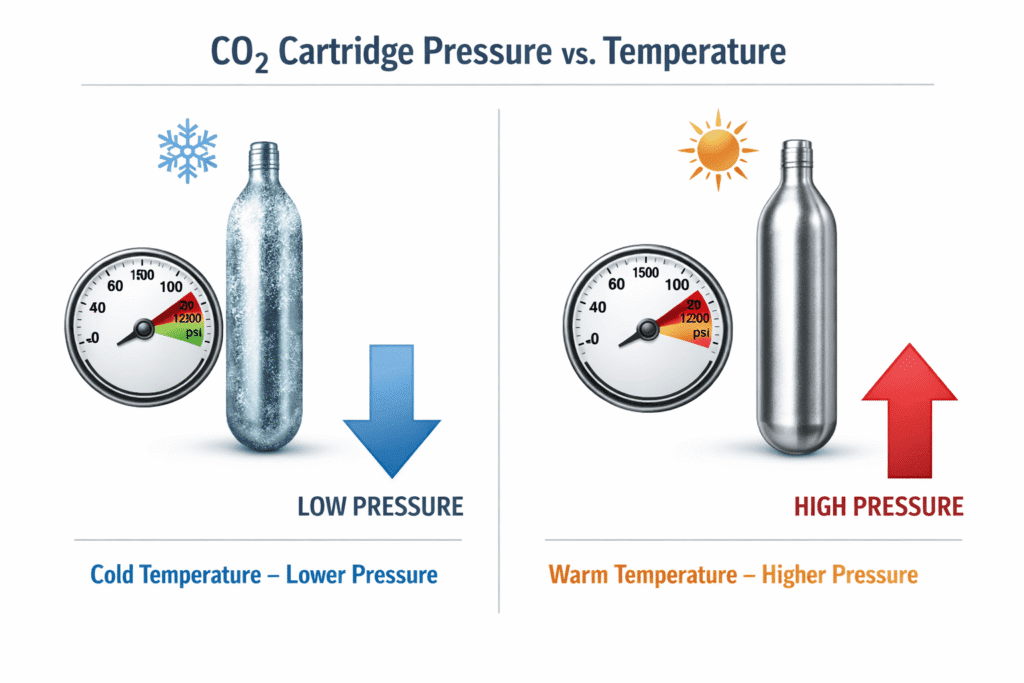
Many buyers look at grams and ignore temperature. But CO2 performance changes with environment. In cold weather, pressure drops and discharge efficiency can feel weaker. In warm weather, pressure rises and output becomes more aggressive. This is not a “quality issue” by default. It is basic gas behavior.
If someone on your team wants a clear, non-technical explanation of why temperature changes pressure and output, I usually share this simple overview of the ideal gas law because it helps buyers understand why “bigger” is not the only way to solve performance complaints.
Hidden Cost Impact Model
| Factor | Oversized Cartridge | Optimized Cartridge |
|---|---|---|
| Unit Price | Higher | Controlled |
| Freight Efficiency | Lower | Better carton density |
| Storage Footprint | Larger | Cleaner SKU layout |
| Annual Waste | Accumulates quietly | Reduced |
| Product Strategy | Less flexible | More precise segmentation |
A lot of buyers only compare unit prices. I always compare the full chain: carton → pallet → container → warehouse turnover → customer usage experience.
A Practical Evaluation Framework
When I review a distributor’s product line, I ask five questions:
- What is the real gas consumption per cycle in this application?
- Is full discharge required for safety or compliance?
- What thread type does the device require?
- What replacement frequency is acceptable for end users?
- What is the shipping and pallet efficiency at your annual volume?
If you want a quick reference your team can use when checking threads, sizes, packaging, and shipping constraints, you can keep this internal guide bookmarked: CO2 cartridge specifications and shipping information. I built it for buyers who need to make decisions fast without guessing.
Conclusion
Habit-based purchasing hides waste. Usage-based sizing protects margin, improves turnover, and reduces downstream complaints. If you have not audited cartridge sizing in the last 12 months, that is usually the first place I start.