Skip to content
From a manufacturing perspective, warehouse turnover is rarely just a sales problem. In many cases, it is a product structure problem.
CO2 cartridges are small products, but they move through the supply chain in large quantities. When the cartridge sizes offered by a distributor do not match real market demand, inventory tends to accumulate unevenly across SKUs.
Over time, this imbalance slows down warehouse turnover.
Why Cartridge Size Influences Inventory Movement
Different cartridge sizes affect several operational variables at the same time:
- carton quantity per SKU
- pallet stacking density
- shipping weight per container
- replacement frequency at the retailer level
For example, in many bicycle inflation product lines:
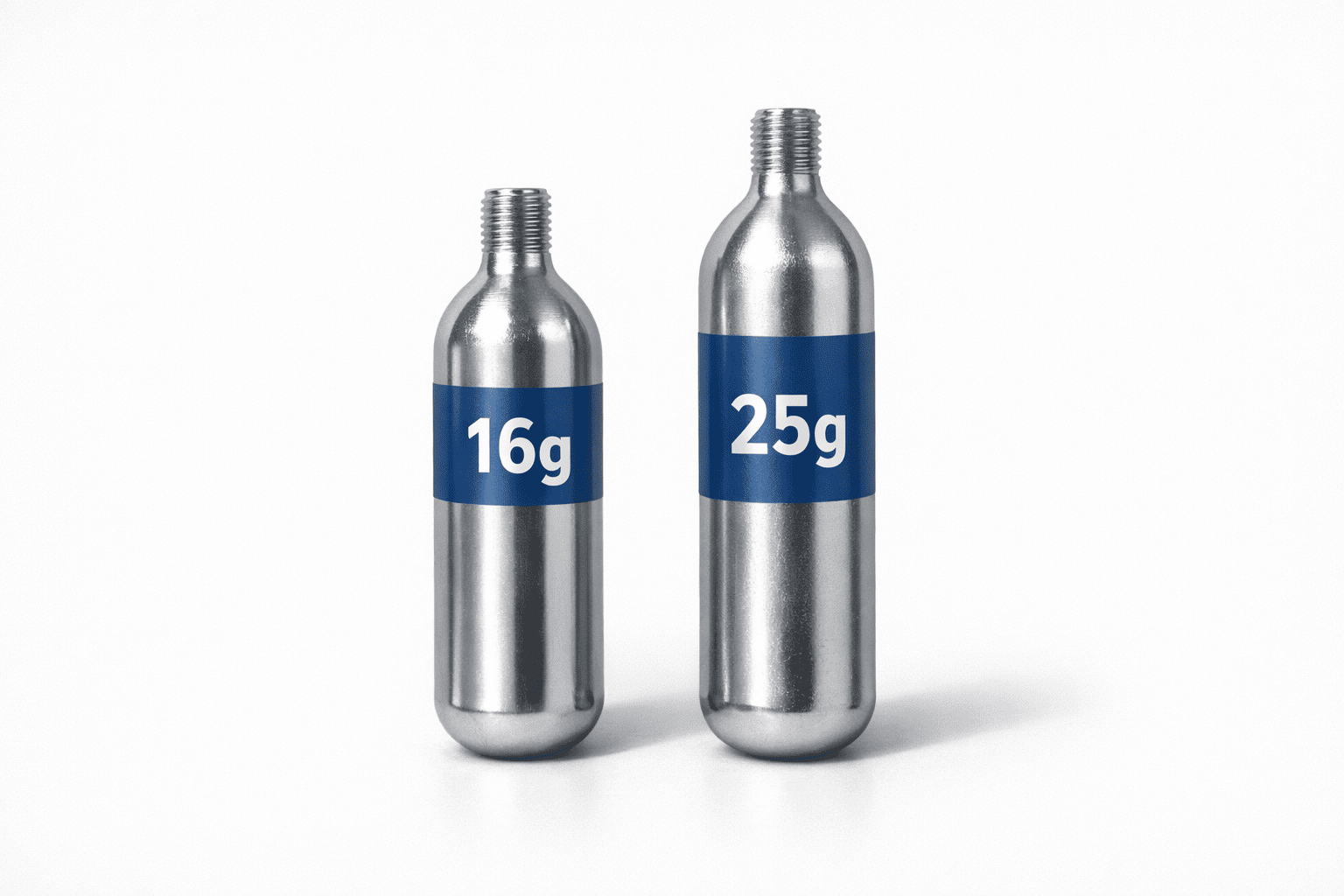
- 16g cartridges are typically packed at around 50 units per carton
- 20g cartridges often fit about 45 units per carton
That difference may look small, but across 1,000 cartons it represents about 5,000 additional units that can move through the warehouse without increasing storage space.
In high-volume distribution environments, those differences accumulate quickly.
A Distributor Case: SKU Structure and Turnover
One distributor we work with in Southeast Asia originally carried only 20g cartridges for their bicycle inflation products. The reasoning was simplicity: one specification for all retailers.
However, their sales data showed a different pattern.
Most commuter bike shops preferred smaller cartridges because they matched the air volume of standard city tires and sold faster at the counter.
Once the distributor introduced 16g cartridges alongside the existing 20g option, inventory behavior changed:
- 16g cartridges moved quickly through high-frequency retail channels
- 20g cartridges remained available for mountain bikes and specialty use
- overall warehouse turnover increased because demand was distributed across two realistic usage segments
Instead of relying on a single SKU, the distributor created a structure that reflected actual consumption patterns.
The Pallet and Container Effect
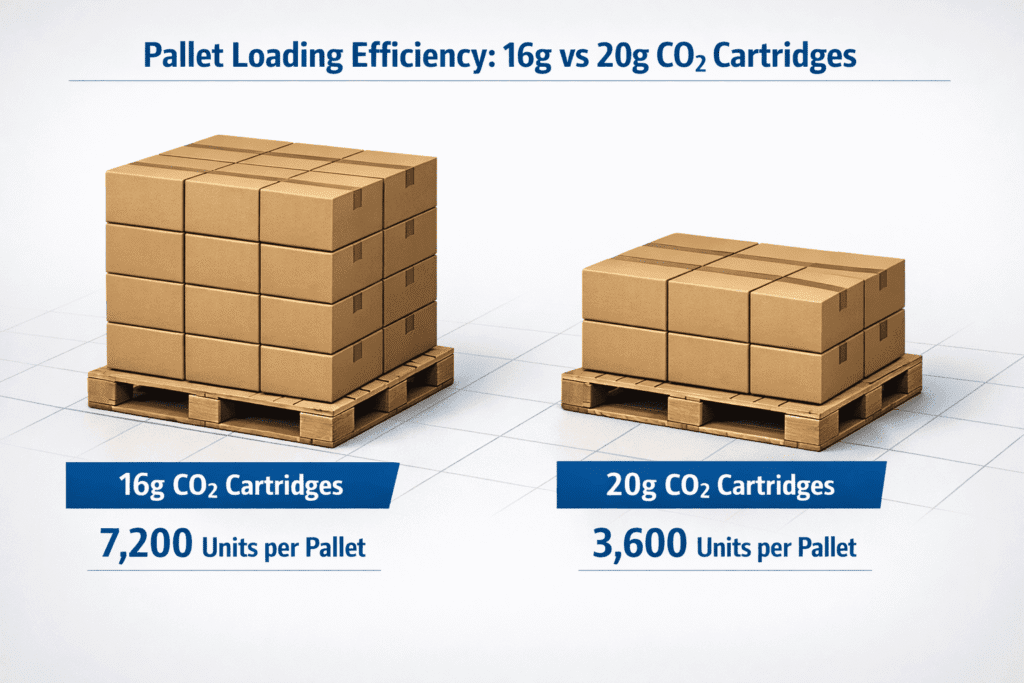
Cartridge size also affects pallet and container loading efficiency.
A small difference in cartridge length can change pallet density.
For example:
- a pallet of 16g cartridges may hold around 1,200–1,300 units depending on packaging
- a pallet of 20g cartridges may hold closer to 1,000–1,100 units
Across a full container shipment, that difference can translate into several thousand additional units transported per container.
Logistics professionals often describe warehouse turnover as the rate at which inventory is sold and replaced over a period of time, a concept explained clearly in the overview of inventory turnover.
When cartridge sizes align with real consumption and shipping efficiency, inventory tends to cycle through the warehouse more smoothly.
Why Single-SKU Strategies Often Slow Turnover
Many distributors initially adopt a single cartridge specification to simplify purchasing.
In practice, this approach often creates hidden friction.
When one SKU dominates the entire product line:
- demand fluctuations affect the entire warehouse
- slow-moving inventory accumulates faster
- purchasing schedules become less flexible
A mixed specification structure tends to stabilize inventory movement.
Typical distribution structures may include:
- smaller cartridges for standard retail demand
- mid-size cartridges for general performance use
- larger cartridges for specialized applications
This segmentation allows inventory to move at different speeds across different markets.
Aligning Cartridge Size With Actual Consumption
From the factory perspective, the most efficient cartridge programs are based on measured consumption rather than market assumptions.
When distributors begin analyzing real usage patterns, they often find opportunities to adjust specifications without changing their overall product line.
The idea of aligning cartridge capacity with real usage data rather than long-standing purchasing habits is discussed further in
capacity alignment based on real usage data.
Small adjustments in specification often lead to more balanced SKU movement across the warehouse.
Long-Term Impact on Warehouse Efficiency
Warehouse turnover improves when inventory reflects real market demand.
Cartridge optimization contributes to this by:
- reducing slow-moving SKUs
- improving pallet and carton density
- aligning stock levels with actual usage patterns
In export-scale distribution, these structural adjustments often produce more consistent inventory cycles than simply increasing order volume.
Most of the time, better warehouse performance does not come from moving more product. It comes from moving the right product sizes at the right speed.