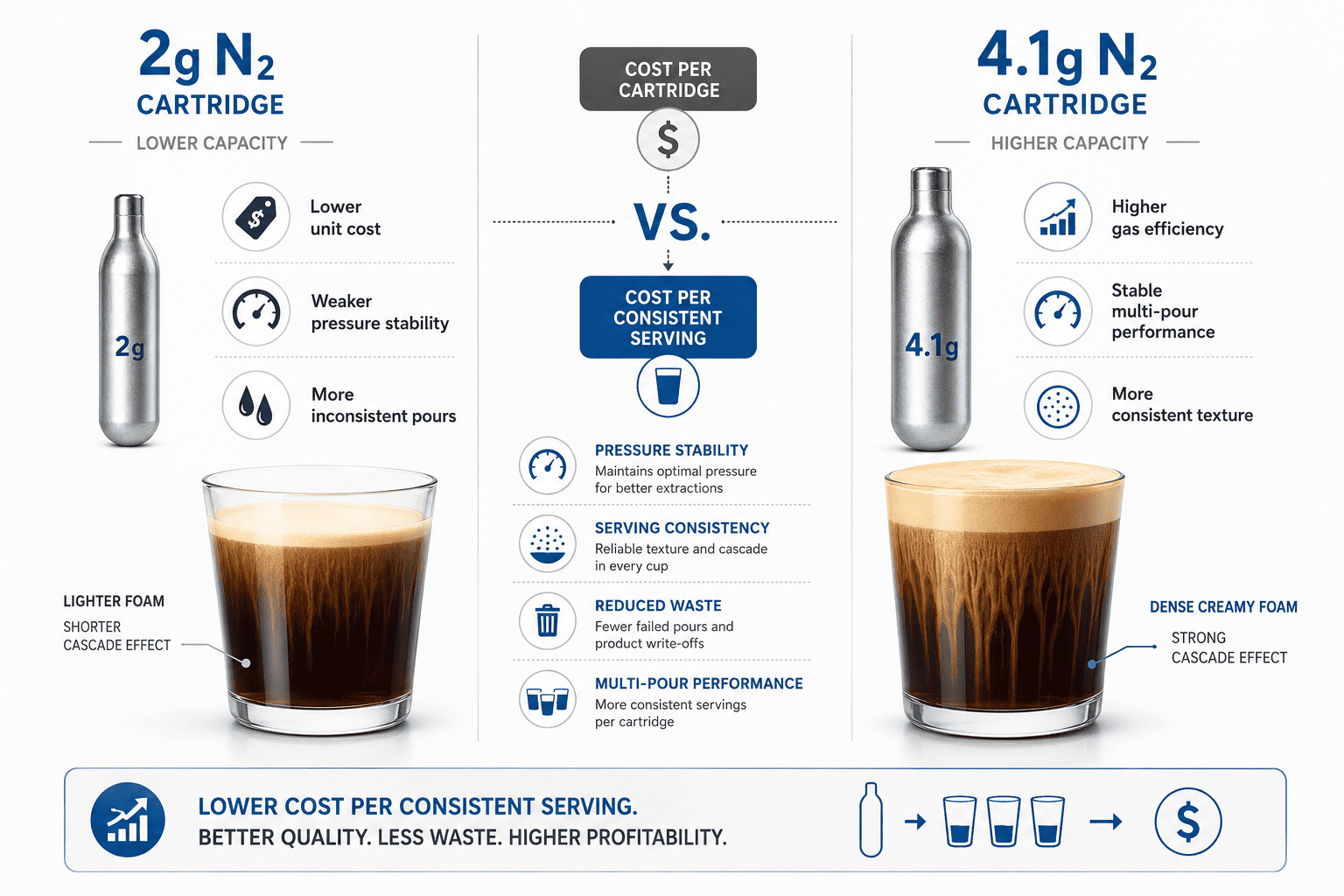
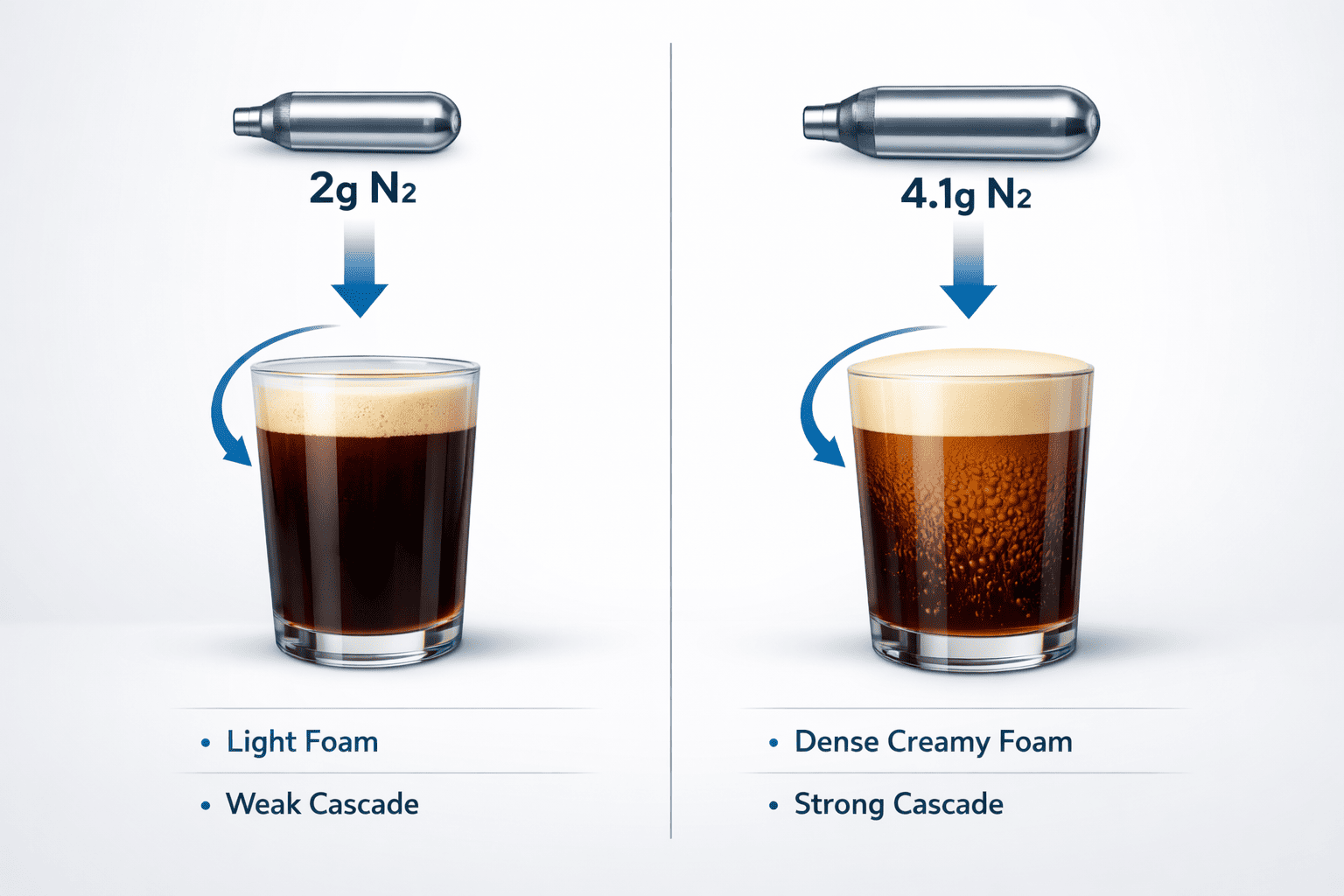
In many nitro coffee applications, 4.1g N2 cartridges are often more cost-effective overall, even though their unit price is higher than 2g cartridges. The reason is simple: larger cartridges usually provide more stable pressure, better foam performance, and fewer failed or inconsistent pours.
Cost-effectiveness in nitro coffee is not just about cartridge price. It also includes:
- serving consistency
- gas efficiency
- number of usable pours
- product presentation quality
This is why many buyers eventually evaluate cartridge size based on performance per serving rather than price per piece.
Quick Cost Comparison
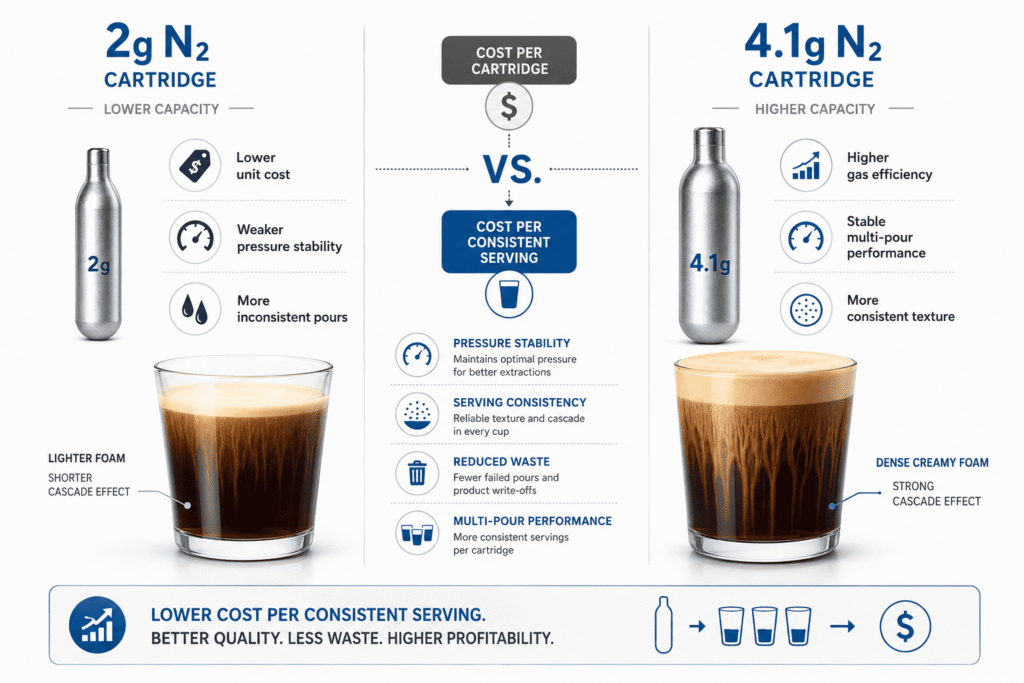
- 2g cartridges → lower upfront cost
- 4.1g cartridges → higher gas efficiency in larger systems
- Weak or inconsistent pours can increase real operating cost
- Larger systems often require 4.1g to avoid pressure instability
Why “Cheaper Per Piece” Can Be Misleading
At first glance, 2g cartridges appear more economical because the individual unit price is lower.
However, nitro coffee performance depends heavily on maintaining stable pressure throughout dispensing.
If a cartridge:
- cannot fully pressurize the system
- loses pressure too quickly
- produces weak foam or inconsistent cascade
then the actual value per serving decreases.
In practical use, buyers often discover that a lower-cost cartridge can create:
- more wasted coffee
- inconsistent presentation
- repeat dispensing attempts
- reduced customer satisfaction
Gas Efficiency vs Unit Price
The real comparison is not:
- “Which cartridge is cheaper?”
but:
- “Which cartridge delivers stable performance with fewer compromises?”
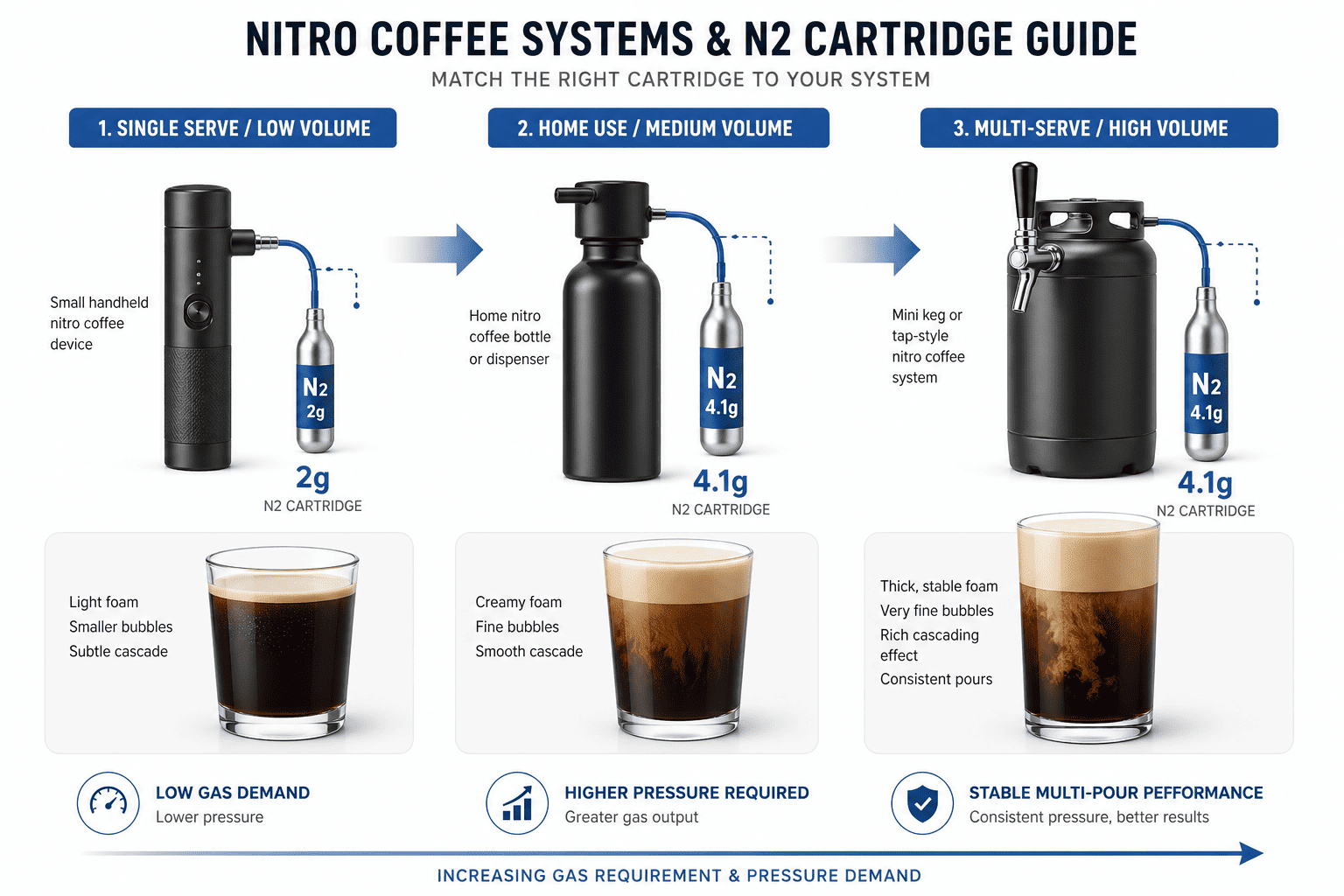
2g Cartridges
Usually better for:
- compact systems
- single-serve applications
- low-frequency use
4.1g Cartridges
Usually better for:
- mini keg systems
- repeated pours
- stable nitro presentation
- multi-serve setups
As system size increases, the efficiency advantage of larger cartridges becomes more noticeable.
The Hidden Cost of Weak Performance
One of the biggest hidden costs in nitro coffee systems is inconsistent presentation.
A system that produces:
- weak cascade
- thin foam
- unstable texture
can negatively affect the perceived product quality, even if the coffee itself is good.
This is especially important for cafés, beverage brands, or wholesale buyers where visual consistency matters across every serving.
Why Larger Cartridges Often Reduce Waste
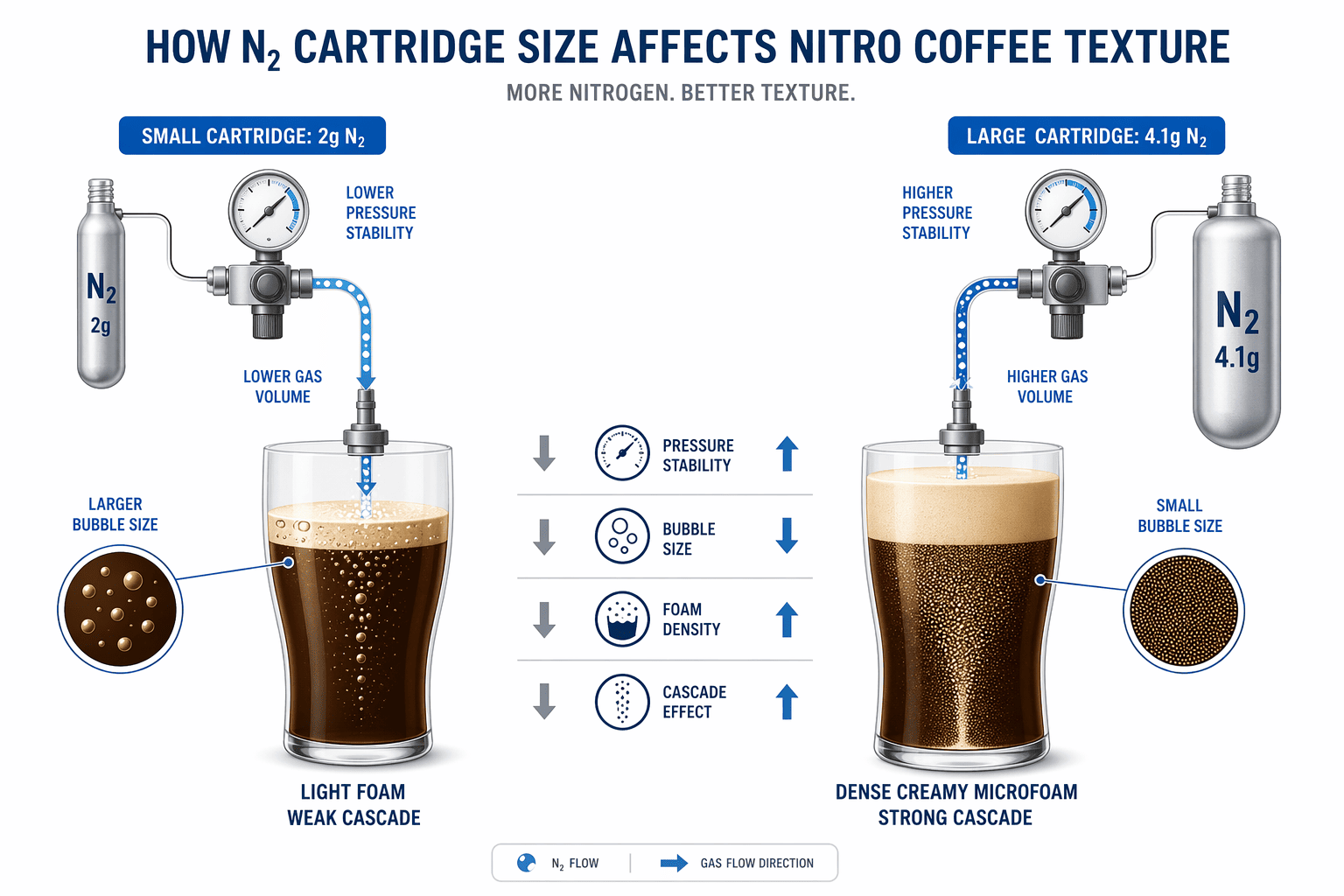
Larger cartridges provide a bigger pressure reserve, which helps:
- stabilize nitrogen infusion
- reduce pressure drop during dispensing
- improve consistency across multiple pours
That stability can reduce:
- failed servings
- unnecessary cartridge replacement
- repeated preparation attempts
In many commercial-style setups, this operational stability becomes more important than the cartridge unit price itself.
Understanding the Real Efficiency Difference
Nitrogen systems depend heavily on gas behavior under pressure.
When gas supply is limited, the system may still function, but performance often becomes inconsistent — especially in larger-volume or repeated-serving environments.
This connection between pressure stability, nitrogen distribution, and serving consistency is also reflected in discussions about how nitro cold brew should have a creamy taste, velvety mouthfeel, and dense microfoam.
How This Fits Into Overall Cartridge Selection
Cost-effectiveness is only one part of the decision. Cartridge size also affects texture, pressure stability, and system compatibility.
For a broader comparison of how 2g and 4.1g cartridges perform in nitro coffee systems, see 2g vs 4.1g N2 cartridges for nitro coffee.
Final Takeaway
If the setup is small and used occasionally, 2g cartridges may still be the lower-cost option.
However, for systems that require:
- repeated pours
- stable pressure
- consistent nitro presentation
4.1g cartridges are often more cost-effective in real use because they reduce performance instability and improve serving consistency.
In practical terms, the more demanding the system becomes, the more the efficiency advantage shifts toward 4.1g cartridges.